

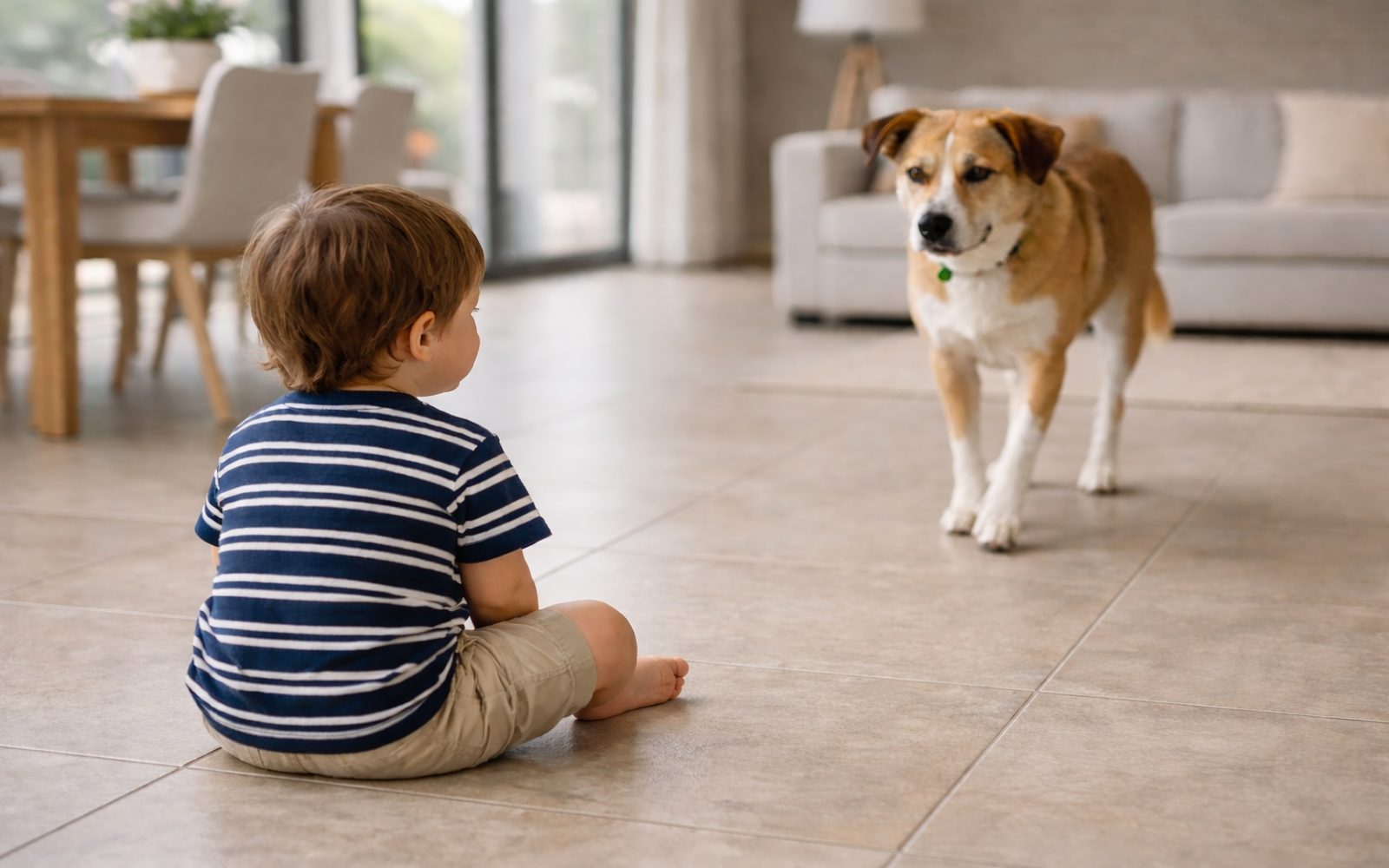
Tile flooring remains a popular choice for family homes thanks to its durability, easy maintenance, and design flexibility. However, when kids and pets are part of daily life, safety becomes just as important as style. Slips and falls are one of the most common household accidents, especially in kitchens, bathrooms, entryways, and mudrooms. This is where tile flooring slip ratings play a critical role. Understanding what these ratings mean helps homeowners make confident flooring decisions that support both beauty and everyday safety.
Why slip resistance matters in active households
Homes with children and pets experience constant motion—running feet, quick turns, water spills, and the occasional muddy paw print. Smooth or glossy tile surfaces may look appealing, but without the right slip resistance, they can quickly become a hazard. Slip-resistant tiles reduce the risk of falls by increasing traction underfoot, even when surfaces are wet.
In areas like bathrooms, laundry rooms, and kitchens, moisture is unavoidable. Entryways also see rainwater and debris tracked in from outside. Choosing tile with the appropriate slip rating helps create a safer environment without sacrificing design.
Understanding the main tile slip rating systems
Slip resistance is measured using standardized testing methods. While several systems exist, two are most commonly referenced in residential flooring.
COF (Coefficient of Friction)
The Coefficient of Friction measures how much resistance a surface provides when something moves across it. In simple terms, higher COF values indicate better traction. Older tiles were often rated using Static COF (SCOF), but modern standards rely on Dynamic COF (DCOF), which more accurately reflects real-life movement.
DCOF AcuTest
DCOF measures traction when a surface is already in motion, making it more relevant for homes with kids and pets. For interior residential floors that may get wet, a DCOF rating of 0.42 or higher is generally recommended. This threshold helps reduce slip risk in areas exposed to moisture.
How tile finish impacts slip resistance
Tile finish plays a major role in how slippery—or safe—a surface feels underfoot.
Polished tiles
Polished tiles offer a sleek, reflective appearance but tend to have lower slip resistance, especially when wet. These are better suited for low-traffic, dry areas where safety concerns are minimal.
Matte and textured tiles
Matte finishes and lightly textured surfaces provide improved grip. These tiles are a popular choice for family homes because they balance visual appeal with everyday practicality.
Structured and anti-slip tiles
Some tiles are designed specifically for enhanced traction, featuring subtle surface patterns or anti-slip coatings. These options work particularly well in bathrooms, mudrooms, and pet washing areas.
Choosing the right slip rating for each room
Not every space in the home requires the same level of slip resistance. Matching the tile rating to the room’s function is key.
Bathrooms and laundry rooms
Water exposure is constant, making slip resistance essential. Tiles with a DCOF of 0.42 or higher and a matte or textured finish help improve safety.
Kitchens
Spills are part of daily life. Slip-resistant tiles support safer movement while cooking, cleaning, or when kids and pets are underfoot.
Entryways and mudrooms
Rain, dirt, and outdoor moisture make these areas prone to slips. Durable, textured tiles help maintain traction while standing up to heavy traffic.
Living areas
While moisture is less common, active households still benefit from tiles that offer moderate slip resistance without looking overly industrial.
Slip resistance without compromising design
One common misconception is that slip-resistant tile limits design options. Today’s tile collections offer a wide range of styles—from natural stone looks to modern concrete finishes—engineered with safety in mind. Advances in manufacturing allow tiles to deliver excellent traction while maintaining a refined, residential appearance.
Large-format tiles, wood-look porcelain, and patterned designs are all available in finishes that meet recommended slip ratings. The result is a floor that feels cohesive with the home’s design while supporting everyday safety.
Installation factors that influence safety
Slip resistance doesn’t depend on tile choice alone. Professional installation plays a major role in overall performance.
Proper subfloor preparation ensures tiles sit level, reducing uneven edges that could cause trips. Grout selection and spacing also affect traction, particularly in wet areas. Experienced installers understand how layout patterns, transitions, and thresholds contribute to a safer finished floor.
Long-term maintenance and traction
Even slip-resistant tiles need proper care to perform well over time. Soap residue, grease, and cleaning product buildup can reduce traction. Using manufacturer-recommended cleaners and avoiding waxy finishes helps maintain the tile’s natural grip. Regular maintenance keeps floors both safe and visually appealing.
Bringing safety and expertise together in Franklin homes
Selecting tile flooring for a family home involves more than choosing a color or pattern. Slip ratings, finishes, room usage, and installation quality all work together to create a safer living environment. With expert guidance, it’s possible to achieve a floor that supports busy routines while enhancing the home’s overall design.
Schedule a tile safety consultation with Carpet Den Interiors in Franklin, TN
Carpet Den Interiors has served Middle Tennessee for over 46 years with trusted flooring expertise and a 97% customer approval rating. As the number 1 flooring retailer in Tennessee, our team helps families across Franklin, Nashville, Murfreesboro, Spring Hill, and Green Hills select tile flooring that balances style, durability, and slip resistance. Visit our Design Gallery or schedule an in-home consultation to explore tile options designed for safer, family-friendly homes.


