

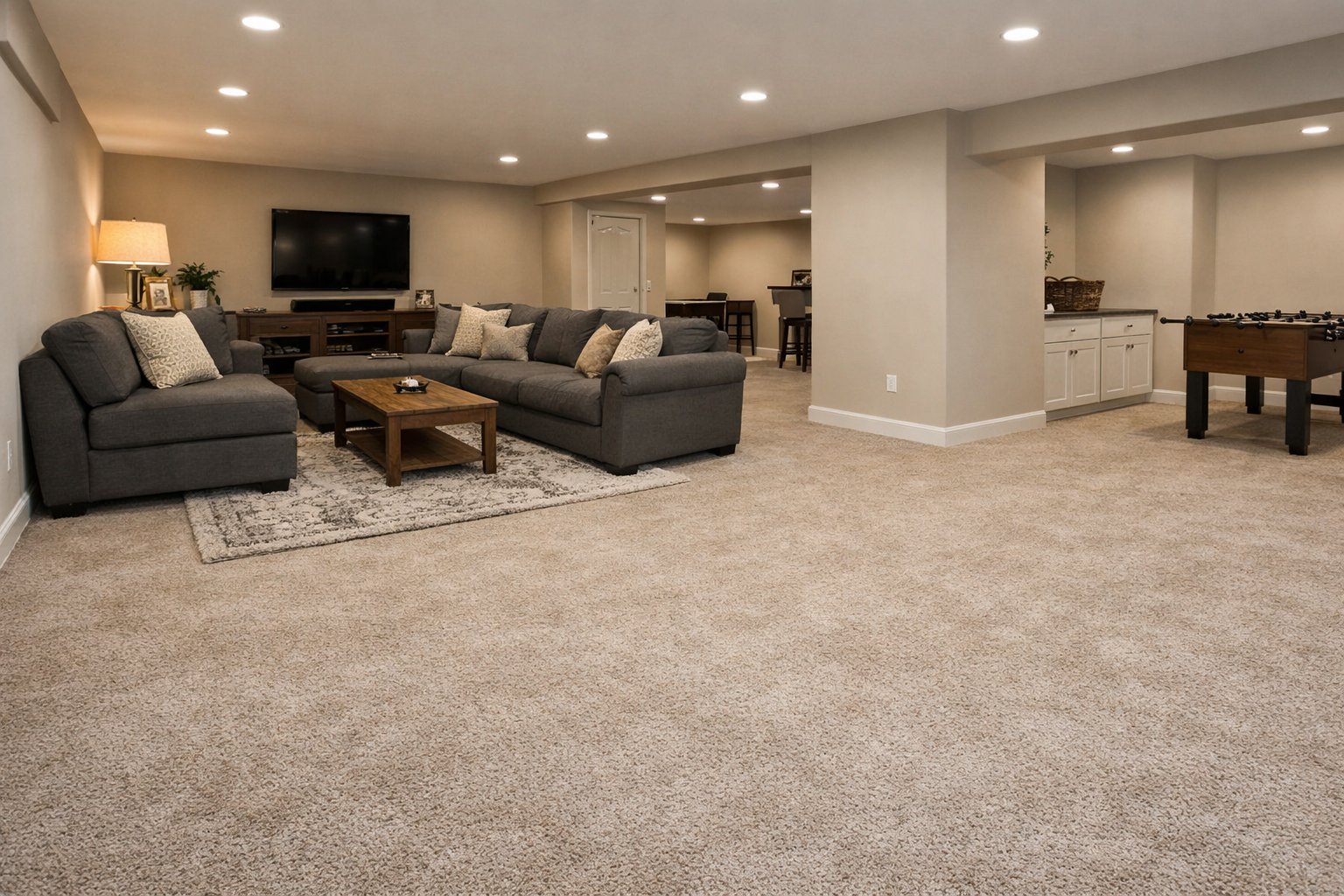
Basements in Franklin, TN often serve as bonus rooms, media spaces, home offices, or guest suites. Yet even beautifully finished basements can feel cool underfoot or slightly damp compared to upper levels. Concrete subfloors naturally hold and transmit moisture, and that underlying chill can travel through flooring materials.
One of the most effective ways to create a warmer, drier basement environment is by installing moisture barrier carpet padding beneath high-quality carpet flooring. The right padding does far more than add softness — it helps protect against moisture vapor, improves insulation, and enhances long-term performance.
Why basements feel cold and damp
Unlike upper floors built over crawl spaces or wooden framing, basement floors are typically poured concrete slabs. Concrete is porous, meaning it can absorb ground moisture and release vapor over time. Even when there is no visible water intrusion, subtle moisture migration can occur.
This constant exchange can lead to:
A cooler surface temperature
A clammy feeling underfoot
Musty odors over time
Premature wear of standard carpet padding
While selecting the right carpet style is important, pairing it with a high-performance cushion designed specifically for below-grade environments makes a dramatic difference.
The role of moisture barrier carpet padding
Standard carpet cushions are designed primarily for comfort and support. Moisture barrier padding, however, includes a built-in vapor-resistant layer that blocks moisture from rising into the carpet fibers.
Built-in vapor protection
Many moisture barrier pads feature a thin, impermeable film laminated to one side. This film prevents spills or ground vapor from soaking into the cushion. Instead of absorbing moisture like traditional rebond padding, the barrier layer redirects it, allowing for easier cleanup and reducing long-term damage.
Added insulation value
Beyond moisture control, these specialty pads offer enhanced thermal resistance. That extra layer between the concrete slab and the carpet helps reduce heat loss, making basement floors feel noticeably warmer. When paired with premium carpet flooring, the result is a more comfortable and inviting space for family gatherings or movie nights.
Warmer floors start from the ground up
Many homeowners assume that upgrading to a thicker carpet pile will solve basement chill. While plush carpet adds comfort, the real transformation happens beneath the surface.
Moisture barrier padding:
Creates a thermal break between concrete and carpet
Minimizes cold transfer
Improves overall energy efficiency
Helps maintain consistent room temperature
In finished basements used as playrooms or living spaces, this added insulation can significantly improve daily comfort.
Protection against spills and everyday life
Basements often serve multiple purposes — entertainment areas, hobby rooms, home gyms, or even snack zones during game nights. Accidental spills are bound to happen.
With standard padding, liquids can seep through the carpet backing and soak into the cushion, leading to lingering odors or mold risk. Moisture barrier padding helps contain spills at the surface level, allowing for quicker drying and simpler maintenance.
This protective layer works especially well in areas where moisture management is a priority, similar to strategies used in other resilient flooring systems like waterproof flooring, where moisture resistance is built into the structure of the product itself.
Choosing the right density and thickness
Not all moisture barrier pads are the same. Density and thickness both impact performance. A pad that is too soft may compromise carpet durability, while one that is too firm can reduce comfort.
For basement installations, flooring experts typically recommend:
Medium to high density for durability
Moderate thickness for balanced comfort and support
A fully attached moisture film rather than loose liners
Proper installation also matters. Seams should be carefully sealed to prevent vapor from bypassing the barrier layer.
Long-term durability and indoor air quality
Moisture control is not only about comfort — it’s also about protecting the investment. Excess moisture trapped beneath carpet can lead to:
Breakdown of adhesives
Mold or mildew growth
Carpet delamination
Unpleasant odors
By limiting vapor intrusion, moisture barrier padding helps extend the life of the entire flooring system. It also contributes to a healthier indoor environment, especially in enclosed basement spaces where air circulation may be limited.
A smarter approach to basement comfort
Basement flooring requires thoughtful planning. While carpet provides warmth, softness, and sound absorption, the foundation beneath it determines how well it performs over time. Moisture barrier carpet padding transforms basement floors from cool and slightly damp to warm and welcoming.
In Franklin and throughout Middle Tennessee, creating a comfortable lower-level space means accounting for both insulation and moisture control from the start.
Visit our Franklin design team for basement flooring guidance
At Carpet Den Interiors, we’ve been helping families across Franklin, Nashville, Murfreesboro, Spring Hill, and Green Hills create comfortable, finished basement spaces for over 46 years. Our flooring experts provide personalized, shop-at-home service and guide every detail — from selecting the right carpet style to choosing moisture barrier padding that protects long term. Connect with us through our contact us page to schedule a consultation and let our team design a basement flooring solution tailored specifically to your home.


